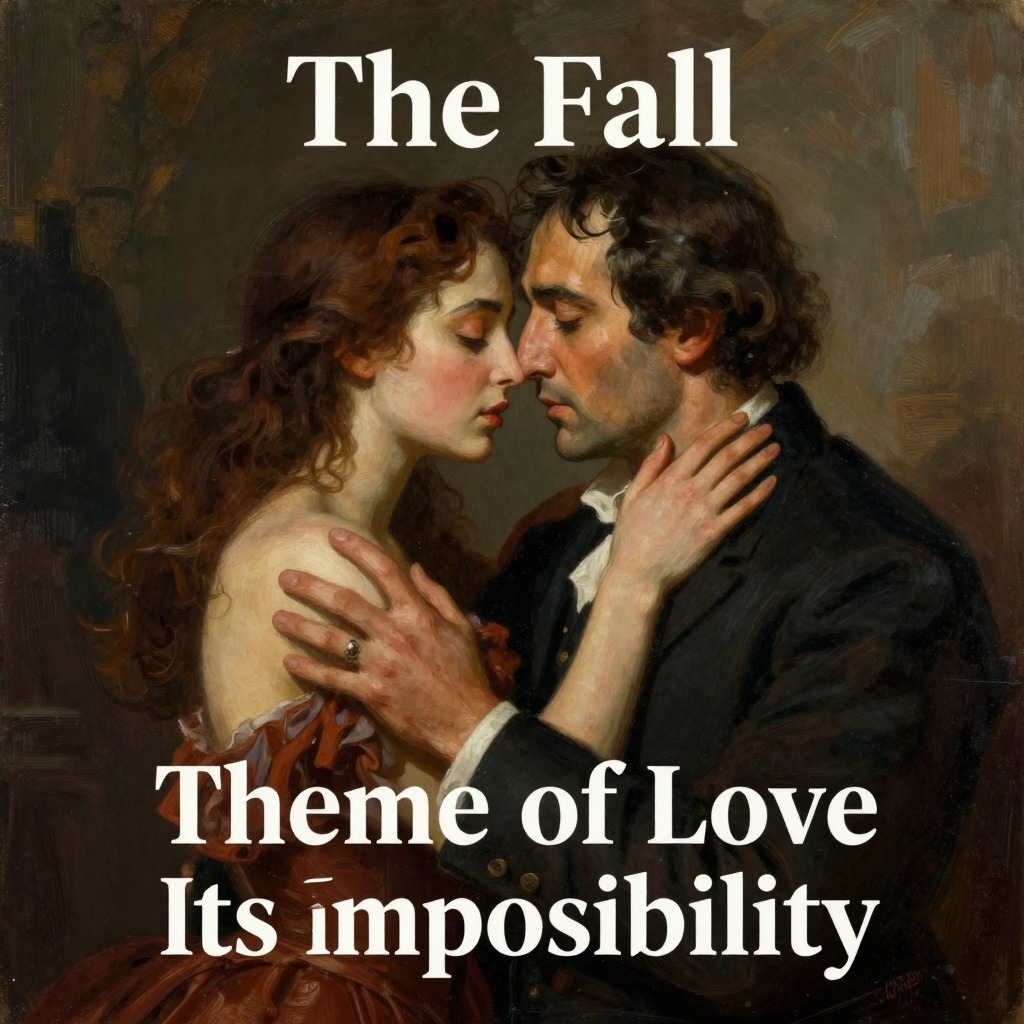
La Vie en rose
In Albert Camus's The Fall, the French song "La Vie en rose" serves as a potent symbol of the protagonist Jean-Baptiste Clamence's deep-seated aversion to love and romantic idealism, a feeling that crystallizes after his failed attempts at genuine emotional connection. The mere sound of the song becomes unbearable to him, representing a visceral rejection of the sentimental promises of love that he has found to be hollow and deceptive.
Aversion and Rejection
Following a period of desperate and ultimately unsuccessful efforts to find love—during which he engaged in a series of simultaneous, passionate promises that only multiplied misfortunes for others—Clamence developed such a loathing for love that for years he could not hear "La Vie en rose" without gritting his teeth. The song, whose title translates to "Life in Pink" and which is famously associated with romantic optimism, becomes for him a trigger for the painful memory of his own emotional failures and the disillusionment that followed. His physical reaction to the music underscores the depth of his disgust, transforming a cultural emblem of love into a personal symbol of torment.
Thematic Significance
Clamence's reaction to "La Vie en rose" is a key element in his broader narrative of self-exposure and confession. It illustrates his inability to sustain the illusions of love, which he had previously treated as a game or a performance. The song's association with a naive, rose-colored view of life stands in stark contrast to Clamence's own cynical and guilt-ridden worldview. His gritting of teeth at its sound is not merely a personal quirk but a public admission of his own failure to participate in the shared cultural fantasy of romantic happiness, marking a stage in his descent into the role of the judge-penitent who condemns all, including himself, for their hypocrisies.